
About
"TaiWan Union Plastic (TUP), which is now one of the solution providers of injection molding machines and the related applications in China.TUP provides the machines ranging from 90 to 6,600 Tons, with the machine matrix of All Electrics, Hydro-Electrics, Multi-Components, Two / Three Platens, which covers almost all main applications in Automotive, Packaging, Medicals, Engineering, 3C, Home Appliance, Logistics etc.The headquarter is located in HangZhou, ZheJiang province, and the other remaining 15 branch offices, sales & service offices are located in China, SEA, America, Europe, Affrica to provide the nearby service to our customers.With regarding to the capability, we have 200,000 square meters of manufacturing base, staffs over 500, annual machine output over 60,000 sets, R&D teams with around 100 skilled people, and annual R&D investment over 50 million of RMB, which coming to 100+ patents and more are on the que.Technology, never stopping has always been our driving force to proceed.We are striving efforts to make constant progress, taking environmental protection, energy saving and high efficiency as our responsibilities, and are committed to providing customers with more comprehensive and valuable application solutions." https://taiwanunionplastic.com/
Home
The clamping force of IMM(Injection Molding Machine) developed and produced ranges from 90- 6600t, including mainstream models such as all-electric, hybrid, multi-component, two/three platen, etc. The application scope covers mainstream application fields such as automotive, packaging, medical, engineering, 3C, home appliances, logistics, etc.
Contact
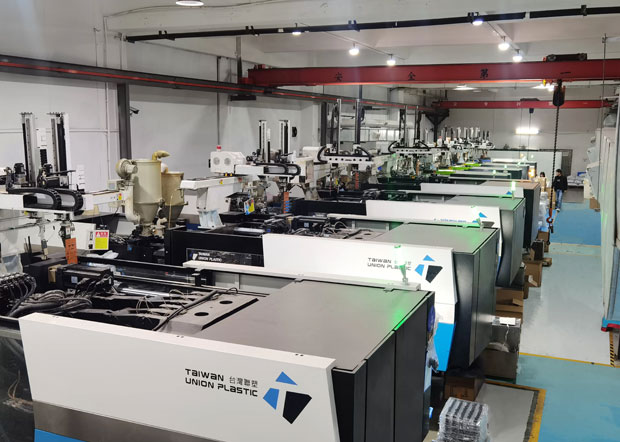 Two-Color and Multi-Component Injection Molding: Process, Machine Types, Material Decisions, and ROI
Two-color and multi-component injection molding allow manufacturers to integrate colors, materials, textures, sealing functions, soft-touch areas, transparent windows, decorative surfaces, or structural zones into one molded component. The process can remove assembly, improve alignment, reduce handling, and create features that are difficult to achieve with one material. It can also create expensive problems when material compatibility, mold transfer, injection-unit sizing, cooling balance, and process sequencing are treated as afterthoughts.
This guide helps engineers, mold makers, managers, and buyers decide whether the process is justified and which machine architecture fits. It distinguishes two-color, two-shot, multi-material, overmolding, insert molding, co-injection, and multi-component machine concepts; explains the main mechanical structures; provides a practical material and tooling checklist; and shows how to estimate the business value of integrating operations.
Taiwan Union Plastic (TUP) has developed hydraulic, hybrid, two-platen, opposite-injection, and multi-component machine configurations for products ranging from small two-color components to large automotive and appliance parts. The correct configuration begins with the final part and transfer sequence, not with a machine series name.
What Is Two-Color Injection Molding?
Two-color injection molding is a process in which two colored polymer shots are molded in a controlled sequence to form one finished part, usually within one automated molding cycle. The two shots may use the same resin family in different colors or different compatible materials when both appearance and function are required.
A common example is a rigid plastic product with two visible colors. The first cavity forms the base geometry. The mold or molded preform then moves to a second position, where another injection unit adds the second color. The transfer may be achieved by a rotating platen, rotating mold core, indexing plate, core-back movement, robot transfer, or another mechanism. The interface between shots must be located precisely so that the finished boundary is clean and repeatable.
The phrase “two-color” mainly describes appearance, but the engineering challenge is broader. The process must control first-shot shrinkage, surface temperature at the second shot, venting, injection balance, material bonding, flash, and the mechanical load created during rotation or transfer. A visually simple color boundary can therefore require a sophisticated mold and machine.
What Is Multi-Component Injection Molding?
Multi-component injection molding is a manufacturing process in which two or more polymer components are injected sequentially or in coordinated stages to create a single integrated molded part. The components may differ in color, hardness, transparency, chemical resistance, friction, conductivity, barrier performance, or other functional properties.
Multi-component molding includes more than two-color products. It can combine a rigid substrate with a soft thermoplastic elastomer grip, create a clear window in an opaque housing, integrate a seal into a connector, mold several colors into an automotive light component, or produce layered structures with different performance zones. Depending on the part and mold, the machine may require two, three, four, or more injection units.
For procurement teams, the key distinction is that a multicolor injection molding machine is not defined only by the number of barrels. The clamping unit, rotary or transfer system, mold-interface accuracy, injection-unit positions, simultaneous movement capability, controller sequencing, and safety logic determine whether the production cell can execute the intended process reliably.
Frequently Asked Questions
This FAQ section answers common buyer and engineering questions.
What is the difference between two-color and two-shot injection molding?
Two-color molding emphasizes two visible colors, while two-shot molding emphasizes two sequential injection stages. Many projects are both two-color and two-shot. A two-shot part can also use different materials with the same color, such as a rigid substrate and a soft seal, so the terms are related but not identical.
Two-color and multi-component injection molding create value when they integrate functions that would otherwise require separate parts, assembly, adhesives, fixtures, inventory, or quality checks. The technology is most successful when the product design, exact material grades, mold transfer, injection-unit sizing, cooling balance, automation, quality tests, and machine sequence are developed together.
Rotary platen machines are efficient for many high-volume two-shot parts. Core-back and core-rotation systems can simplify transfer for suitable geometries. Opposite-injection and multi-angle layouts solve complex gate and large-part requirements. Two-platen multi-component machines extend the process to very large molds and high clamping forces. None of these structures is universally best; the part and mold determine the architecture.
Taiwan Union Plastic can evaluate multi-component projects across hydraulic, hybrid, opposite-injection, rotary, and two-platen platforms. Buyers who provide complete part, mold, material, cycle, and acceptance data will receive a more defensible machine selection and reduce the risk of costly changes late in the project.
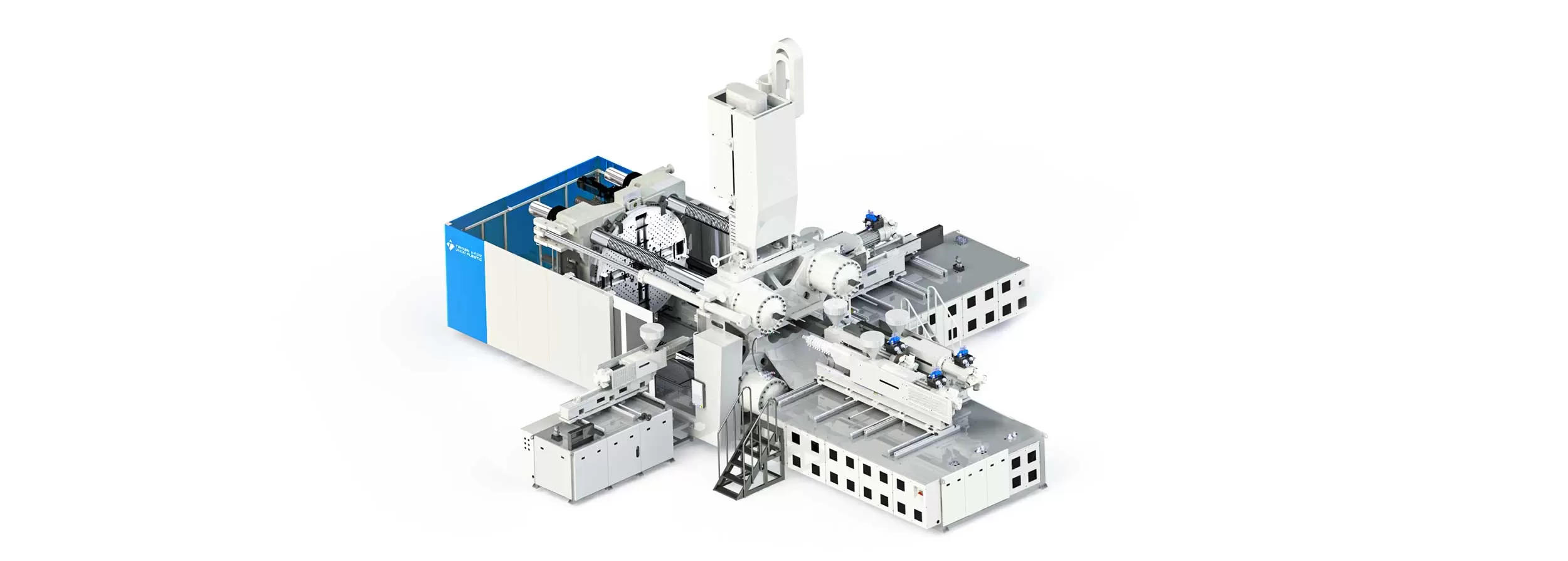 HS-D Two-Platen Multi-Component Injection Molding Machine
hs-d Two-Platen Multi-Component Injection Molding Machine
If you are seeking a stable, efficient and high-quality large-scale multi-color injection molding solution, then the HS-D two-part multi-color series with vertical turntable and two-part mold locking structure is the perfect choice for you.
Suitable for Large Molds
The larger ejection stroke and mold capacity make this two platen injection molding machine suitable for installing large molds and supporting a wider range of applications.
Vertical Turntable Structure
Diameter of the turntable is 3000mm, and it can bear a load of 38t.
More Comprehensive Processes
The flexible center-distance structure allows the two platen injection molding machine to be combined with multi-angle injection stations to meet diverse and customized production requirements.
Functional Advantages
Two-Platen Stucture
Highly rigid molds, with uniform force distribution; high-pressure mold-locking hydraulic cylinders, with locking position accuracy of ±0.2mm
Independent control of servo hydraulic system, energy-saving effect improved by 20%
High-torque material-mixing motors enable the two platen injection molding machine to support the production of large automotive parts, household appliance components, and other multi-color molded products
Multi-action synchronization, shortening the cycle time
European imported controllers and independently developed TUP software, fully optimizing machine operation, control and molding
Vertical Turntable Structure
The servo motor controls the 180° forward and reverse rotation of the turntable, and jointly positions the positioning cylinder to further control the accuracy of the turntable.
A pusher device is set on the back of the turntable to reduce the contact friction between the turntable rotation and the moving template.
The turntable gear is built-in, which increases the size of the mold installation surface and is suitable for a wider range of mold installations.
The TUP multiple turntable patent devices are configured to prevent common problems such as the turntable tilting under heavy load.
Multi-Angle Injection Station
The injection and plasticizing system adopts linear guide rails with low friction coefficient.
The high rigidity single-cylinder injection structure and low inertia actuator design ensure fast response and high precision.
The flexible center distance structure can be combined with multi-angle injection stations to meet diverse and personalized requirements.
Two-Platen Stucture
Vertical Turntable Structure
Multi-Angle Injection Station
Application of Two-Board Five-Colored Pattern
Our company mainly focuses on the trial molding and mass production of auto parts color injection, light guide strips, and thick-walled components. Therefore, we have very high requirements for the diversity and stability of the equipment. We have continuously purchased multiple models such as dual-color machines, two-platen five-color machines, and beam scanners, and have been a loyal fan of Taiwan Lianshu multi-color machines for a long time.
Taiwan union plastic machinery co ltd, is one of the advanced injection molding equipment manufacturers and complete system solution suppliers in China.
The clamping force of IMM(Injection Molding Machine) developed and produced ranges from 90- 6600t, including mainstream models such as all-electric, hybrid, multi-component, two/three platen, etc. The application scope covers mainstream application fields such as automotive, packaging, medical, engineering, 3C, home appliances, logistics, etc.
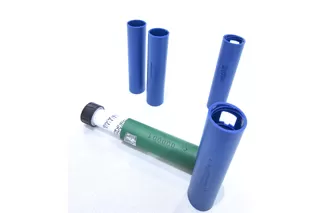 Healthcare & Medical
Cleanliness, High Precision, Traceability. Suitable For Medical Consumables And Aseptic Instrument Housings. Applicable To Syringe Barrels, Infusion Sets, Surgical Instrument Handles, As Well As Medical Housings And Accessories Respectively.
Healthcare & Medical
Our medical injection molding machine solutions are designed for medical-grade clean molding, covering disposable precision medical consumables as well as large medical appearance and structural parts.
By adopting dedicated medical injection molding machine models and clean-production standards, manufacturers can achieve dimensional accuracy, stable performance, and controlled production that meets the medical industry's strict requirements for quality, compliance, and precision.
Taiwan Union Plastic, is one of the advanced injection molding equipment manufacturers and complete system solution suppliers in China.
The clamping force of IMM(Injection Molding Machine) developed and produced ranges from 90- 6600t, including mainstream models such as all-electric, hybrid, multi-component, two/three platen, etc. The application scope covers mainstream application fields such as automotive, packaging, medical, engineering, 3C, home appliances, logistics, etc.